

Bowls
-
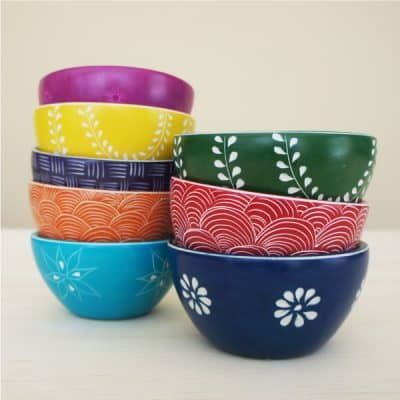
Two Pattern Bowls
$15.00These colorful round bowls are a fair trade product handmade in Kenya. They are hand carved out of stone, sanded until smooth, and dyed. Then an artisan uses a knife to etch the patterns into the inside and outside of each bowl. These unique catchalls can be used to hold change, jewelry, keys, or office supplies. For decorative use only; getting them wet could damage the dye.
Approximately 3.5 inches wide. Sold individually.
-
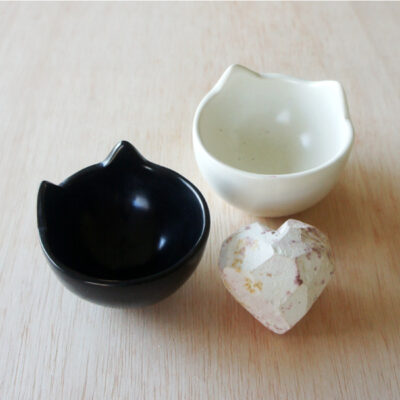
Cat Head Bowls
$15.00These charming cat bowls are a fair trade product handmade in Kenya. They are hand carved out of stone and then sanded until smooth. Since the natural bowl shows the natural colors of the stone, some color variations should be expected. One can often see shades of cream, gray, pink, and brown in the bowl. These unique catchalls can be used to hold change, jewelry, keys, or office supplies. For decorative use only; getting them wet could damage the black dye.
Sold individually.
-
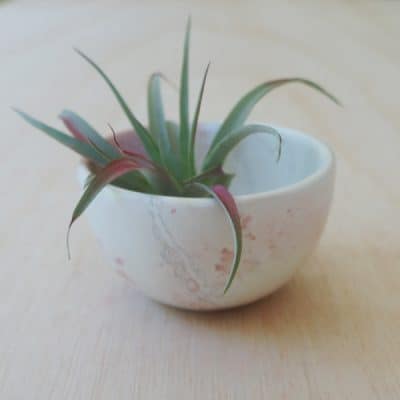
Natural Round Bowl, Small
$15.00This natural small round bowl is a fair trade product handmade in Kenya. It is hand carved out of stone and then sanded until smooth. Since the natural bowl shows the natural colors of the stone, some color variations should be expected. One can often see shades of cream, gray, pink, and brown in the bowl. These unique catchalls can be used to hold air plants, change, jewelry, keys, office supplies, or succulents.
Approximately 3.5 inches wide and stands 2.5 inches tall. Sold individually.
-
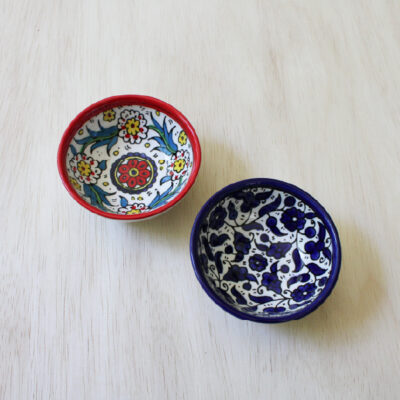
Ceramic Bowl
$16.00These ceramic bowls are fair trade products handmade in the West Bank. Each bowl is approximately 3.5 inches wide. Sold individually.
Saleem and his late wife started their ceramic business decades ago. Each of his five sons (he has no daughters) is specialized in a different aspect in the art of ceramics. Due to the volatile political situation, they can no longer count on the local market. They depend on foreign buyers. When they receive large orders, they work with other individuals and households, many of whom they trained themselves in their homes. In this manner, they are able to support the livelihood of about 150 people.
